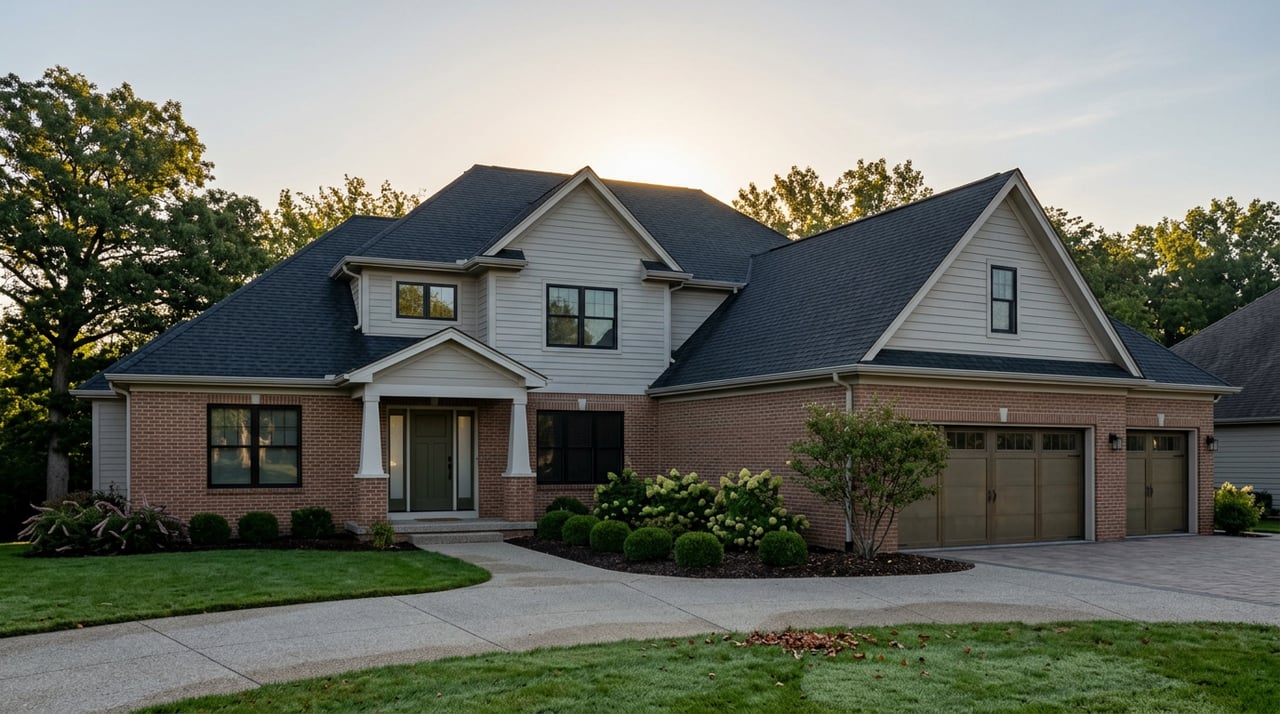
Peotone's housing market is more complex than any median price you'll find on a listing site. Most guides to this town describe it as a rural escape valve from the density of Chicago, a place where a dollar still buys more house and more land than it does closer to the Loop. That's true, but it isn't the whole reason. Another part of Peotone's housing-market context is the state's acquisition of land for the proposed airport, a long-running project.
State land holdings
The Federal Aviation Administration approved the Will County site for a future airport back in July 2002, and the Illinois Department of Transportation began acquiring land that same year with $75 million in state funding. The state bought the privately owned Bult Field outright in 2014, folding an existing general aviation airport into the larger footprint. By 2024, reporting on the project put the state's holdings at roughly 89 percent of the acreage it would need to build a cargo-focused airport between Beecher and Peotone.
The state holds roughly nine out of every ten acres in the mapped project area, a substantial share of land associated with the proposed airport. That ownership is part of the local development context.
Land ownership and local tax revenue
A local landowner-advocate who has followed the project closely told Capitol News Illinois in 2024 that state ownership has constrained growth in Peotone and Beecher and reduced tax revenue a nearby water conservation district otherwise could have collected over roughly two decades. The report presents these as local effects associated with the land purchases.
Compare that to Monee, a few miles north along the same Interstate 57 corridor. In July 2026, Voortman Steel Machinery announced a new production facility there, a $51.4 million investment creating more than 100 jobs on a 27-acre site with an 80,000-square-foot production building. The project is one example of industrial investment in the Southland. Land within Peotone's proposed airport footprint is part of a separate, long-running planning process.
Why reported median prices vary across snapshots
In Peotone, the number of homes changing hands in any given month is small, so a small sample can swing sharply. Three separate snapshots from this year illustrate that variability.
| Snapshot window | Reported median price | Change reported |
|---|---|---|
| March 2026 | $310,000 | down 10.2% year over year |
| May 2026 | $340,000 | up 8% year over year |
| June 2026 | $415,000 | down 3% month over month |
Those are three reported price snapshots across a four-month stretch, based on different reporting windows and measures. In a town where total active inventory typically sits in the teens to low twenties, a limited number of listings and sales can make reported figures swing sharply. In a market that thin, one $850,000 sale or one distressed sale at the bottom of the range can move a sale-price median by tens of thousands of dollars without reflecting any real shift in what the town is worth. With fewer listings, every closing carries more statistical weight in a sale-price median than it would in a market with more turnover.
The May 2026 addendum and procurement process
The procurement process may be moving forward, though slowly and without a firm date attached. In 2023, the Illinois General Assembly passed a bill requiring IDOT to begin a formal prequalification process for private developers, which took effect as state law on January 1, 2024. IDOT issued its Request for Qualifications later that year, inviting firms to submit statements of interest in designing, building, financing, and operating the airport under a public-private partnership. On May 7, 2026, IDOT published an addendum to that same RFQ, along with additional procurement information, the most recent concrete step in a process that has been discussed in some form since the 1960s.
An addendum to a qualifications solicitation is not a groundbreaking. It doesn't set a construction date or guarantee the airport will be built. A 2024 economic analysis from a labor-affiliated policy institute projected the airport could eventually support around 6,300 jobs and more than a billion dollars in economic activity; those figures are projections, and the airport has not been built. The addendum indicates that the procurement process remains active.
What this means if you're comparing Peotone to its neighbors
If you're weighing Peotone against a town like Monee or another Southland community that's already absorbing new investment, the comparison isn't simply "cheaper versus pricier." It's a comparison between different development contexts. Peotone's housing market also reflects a particular land-use history, alongside factors such as school quality, commute times, and local demand. That distinction matters for two practical reasons. First, potential appreciation may be uneven, and the airport project's land holdings and procurement timeline are among the factors to consider. Second, for anyone evaluating land or acreage near town rather than just an existing home, zoning and proximity to the state's holdings matter more here than they would almost anywhere else in the region, and it's worth having someone who understands that history walk the parcel with you before you assume a lot's value is set purely by its square footage.
None of that changes what Peotone actually feels like day to day. The Peotone Mill, a windmill built in 1872, still anchors the town's small historic district and its annual Old Mill Fall Fest. Downtown still runs on Cornerstone Coffee House, Corner Cafe, and Game On! Bar & Grill, with Archy's Sweet Treats and Dolomiti covering dessert. The Will County Fairgrounds still host the Will County Fair. These places and events offer another part of Peotone's local context, separate from the airport procurement process. Online price figures do not by themselves capture the area's airport-related land-use history.
FAQ
Does the RFQ addendum mean construction is starting soon? No. The addendum adds information to an ongoing qualifications process for private developers. It does not set a construction timeline, and the project has stalled at earlier stages before.
Should I be worried about buying near the airport footprint? The state has been acquiring land through purchase rather than active new eminent domain proceedings in recent years, and the current process is a developer qualification stage, not a construction phase. Anyone considering a property near the mapped footprint should have it reviewed by someone familiar with the project boundaries before making an offer.
Why do different sites show such different median prices for Peotone? Peotone's inventory is small enough that a single high or low closing can shift the reported median significantly from one reporting window to the next. That's a function of low transaction volume, not necessarily a sign of a market moving sharply in one direction.
If you're trying to figure out whether Peotone fits what you're looking for, or how it stacks up against a faster-growing neighbor, the Michelle Arseneau Group can walk you through what the land history actually means for a specific address, and get you a clear picture of what your money buys here compared to the rest of the Southland. Reach out for a free home valuation to start the conversation with real numbers instead of a portal average.
This article is general information, not legal, tax or financial advice. Consult a qualified professional about your situation.